
Modern Farm Skills for Rural Livelihoods
Centum Foundation’s Farm Mechanisation initiative is training 120 rural beneficiaries in tractor driving and mechanised farming — enabling new income opportunities, strengthening employability, and encouraging women’s participation in non-traditional agricultural roles.
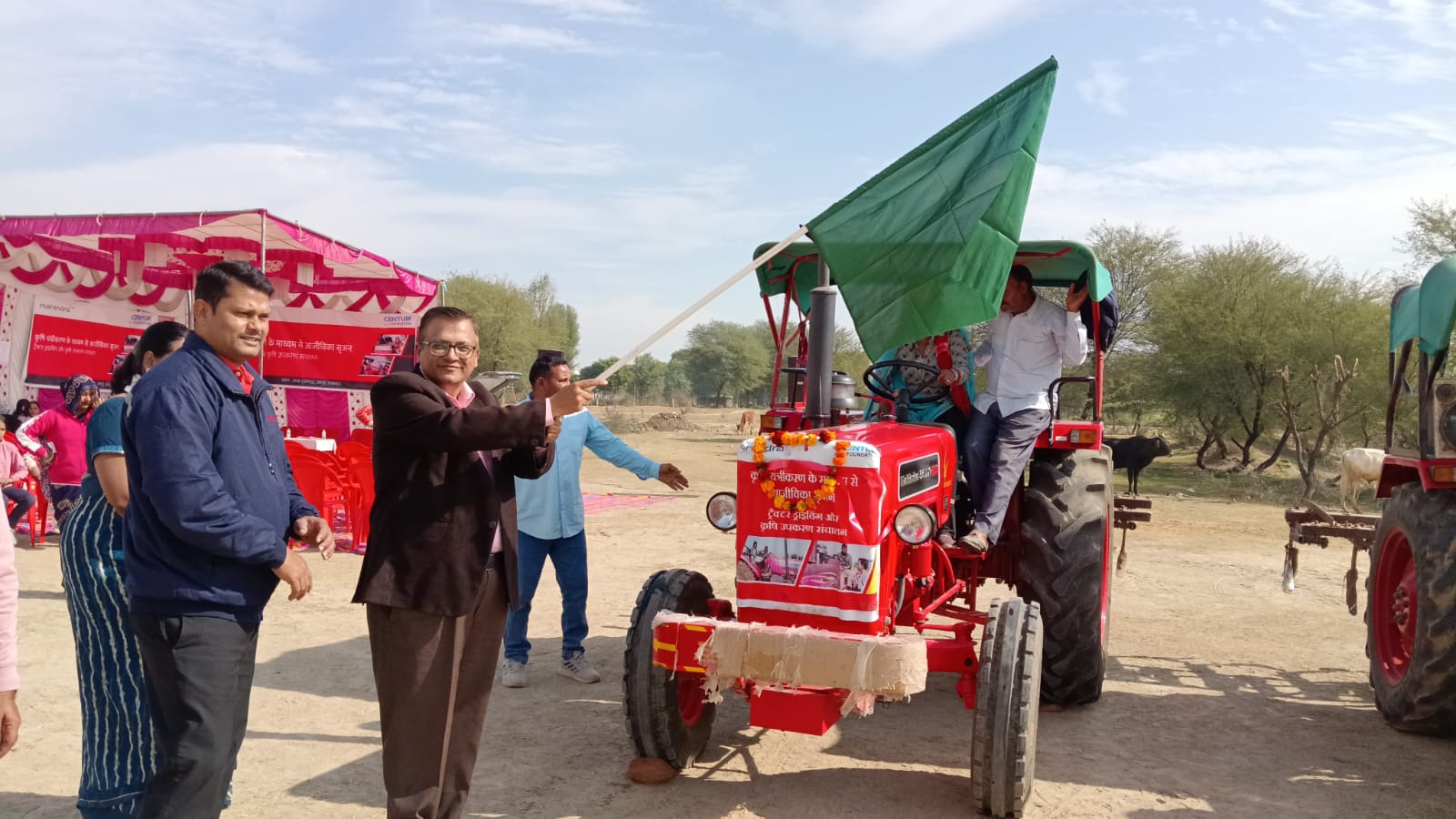
Enhancing Rural Livelihoods through Farm Mechanisation
Category: Case Study
Focus Area: Corporate Social Responsibility | Rural Livelihoods | Agriculture
Locations: Rajasthan, Maharashtra, Telangana
Corporate social responsibility in India plays a critical role in addressing structural challenges faced by rural communities—particularly smallholder farmers who rely on labour-intensive practices and face limited access to modern agricultural technologies.
Enhancing Rural Livelihoods through Farm Mechanisation is a CSR initiative jointly undertaken by Centum Foundation and Mahindra Farm Division to improve agricultural productivity, reduce physical drudgery, and create sustainable livelihood opportunities for smallholder farmers. Implemented across Jaipur (Rajasthan), Nagpur (Maharashtra), and Zaheerabad (Telangana), the project focuses on building mechanisation skills, promoting gender inclusion, and strengthening rural economic resilience.
This case study presents how targeted corporate social responsibility initiatives can modernise agriculture while fostering inclusive and community-driven development.
The CSR Challenge
Why Corporate Social Responsibility Was Needed
In rural India, millions of farmers continue to depend on manual and labour-intensive farming practices. This often results in:
High physical strain and long working hours
Lower productivity and yield per hectare
Limited income stability
Restricted participation of women in mechanised agriculture
The absence of mechanisation not only affects farm output but also constrains broader rural economic growth. These challenges highlight the need for corporate social responsibility initiatives that combine skill development, access to technology, and community engagement to transform agricultural livelihoods.
The CSR Initiative
Farm Mechanisation as a Corporate Social Responsibility Initiative
The Farm Mechanisation Training Program was designed as a structured CSR intervention to equip rural farmers with the skills needed to adopt modern mechanised farming practices.
Core objectives of the initiative included:
Building capacity to operate tractors and tractor-mounted equipment
Reducing gender disparities in mechanised farming
Improving farm productivity and operational efficiency
Supporting sustainable and cost-effective livelihood practices
Strengthening community participation and shared economic benefits
The program adopted a blended training approach, integrating classroom learning, practical demonstrations, and on-the-job training (OJT) conducted directly on farms.
Implementation at Scale
From Vision to Action
The initiative was implemented across three states and multiple rural clusters, ensuring regional adaptability and relevance to local farming practices.
Training delivered through phased implementation
Equipment sourced locally to strengthen community economies
On-the-job training conducted on host farms, benefiting both trainees and host farmers
Continuous engagement with farmers, women participants, and community groups
Project Coverage
Location | State |
Jaipur | Rajasthan |
Nagpur | Maharashtra |
Zaheerabad | Telangana |
Who the CSR Initiative Reached
Inclusive and Gender-Responsive Design
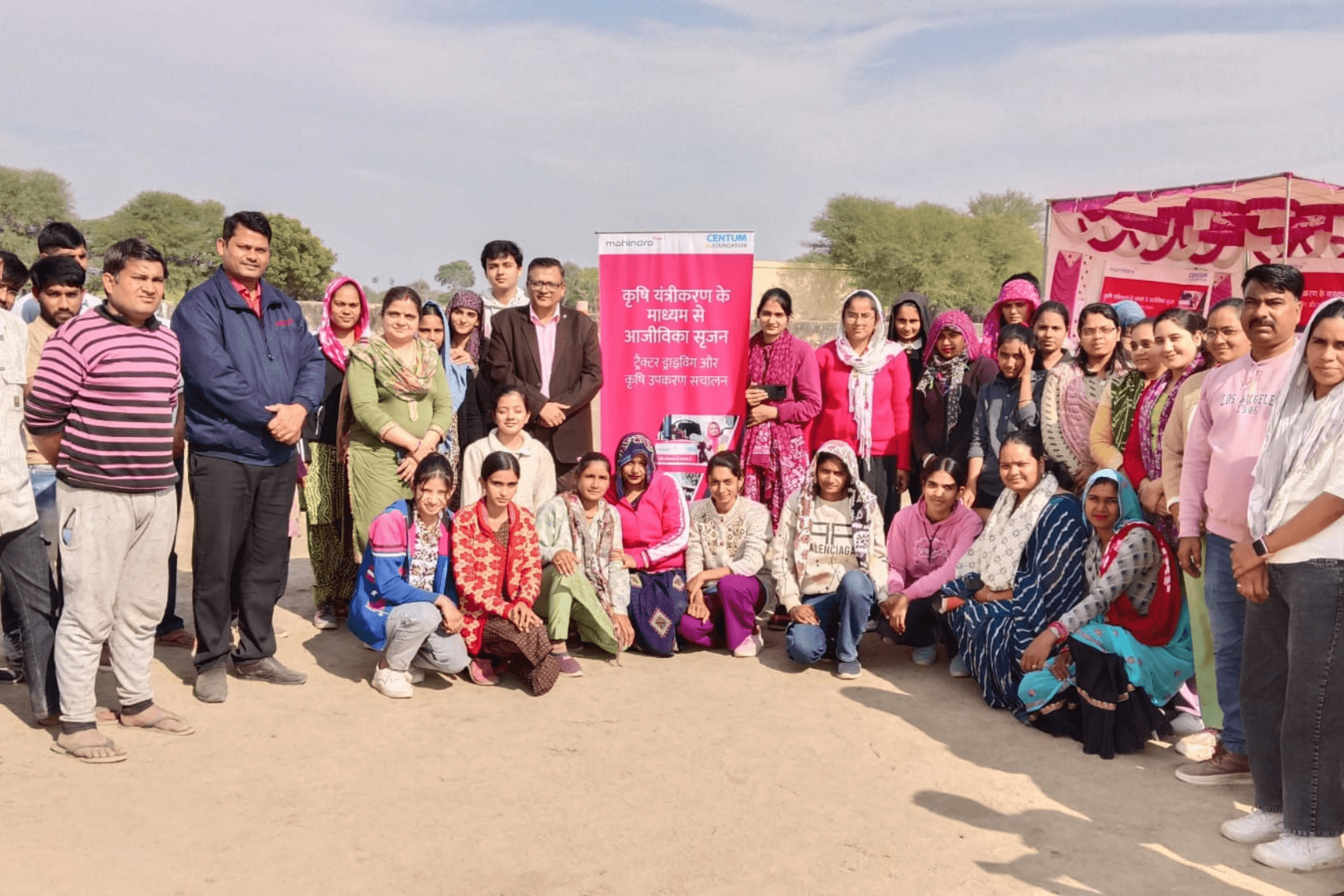
Over three phases of implementation, the program trained 1,896 farmers, with a strong emphasis on inclusion.
35% women participants, challenging traditional gender norms in agriculture
Smallholder farmers and rural households as primary beneficiaries
Increased participation of women in farm operations and decision-making
This reflects how socially responsible management can design CSR initiatives that promote equity while delivering economic outcomes.
Measurable CSR Impact
Productivity, Income, and Reduced Drudgery
The Farm Mechanisation initiative delivered tangible outcomes across productivity and livelihoods:
Significant reduction in physical labour — tasks that earlier took ~100 hours were completed in 2–3 hours using mechanised tools
Increased acreage covered during farming operations
Reduced dependence on hired labour, lowering operational costs
Improved crop yields and better soil health through efficient practices
These outcomes demonstrate the economic and social value of well-designed CSR social responsibility initiatives.
Key Impact Highlights
Impact Area | Outcome |
Farmers Trained | 1,896 |
Women Participants | 35% |
Labour Time Reduced | 100 hrs → 2–3 hrs |
Income Opportunities | On-farm + off-season work |
Community Adoption | Increased mechanisation uptake |
Beyond Productivity
Employment and Community-Level Impact
The initiative also unlocked new employment avenues:
Tractor operation and licensing enabled supplemental income during off-seasons
Local tractor rental models generated income for equipment owners
Youth interest in agriculture increased due to modernised practices
Community-level investment discussions emerged among SHGs and farmer groups
This ripple effect shows how corporate social responsibility initiatives can stimulate broader rural economies beyond direct beneficiaries.
Advancing Gender Equality in Agriculture
Women as Agents of Change
A key outcome of the project was the transformation in women’s participation:
Women trained in tractor operation and mechanised tools
Increased confidence, agency, and decision-making power
Greater social recognition within families and communities
Improved time management and work–life balance
Mechanisation reduced physical strain, enabling women to manage farm responsibilities more efficiently while contributing directly to household income.
Why This CSR Model Works
A Scalable and Sustainable CSR Framework
The success of the Farm Mechanisation initiative lies in:
Regional adaptability
Hands-on, community-based training
Gender-responsive design
Local economic integration through equipment rentals
Continuous learning and refinement across phases
This project demonstrates the pros of corporate social responsibility when interventions are grounded in community needs and long-term sustainability.
The Way Forward
Building on early successes, future phases of the initiative aim to:
Integrate with government schemes and subsidies
Strengthen partnerships with SHGs and FPOs
Provide continued handholding and mentorship
Introduce entrepreneurship and farm-business skills
These enhancements position the initiative as a replicable model for corporate social responsibility in India’s agricultural sector.
Conclusion
Enhancing Rural Livelihoods through Farm Mechanisation exemplifies how corporate social responsibility initiatives can modernise agriculture, promote gender equity, and build resilient rural economies.
Through skill development, community engagement, and inclusive design, the project demonstrates how corporations that are socially responsible can drive sustainable and measurable impact across rural India.