
Empowering 20,000 Women Through Skills
Through the KAABIL Employability Enhancement Training initiative, over 20k women across 19 states have gained domain skills, workplace readiness, & confidence, leading to 9k+ placements in meaningful employment.
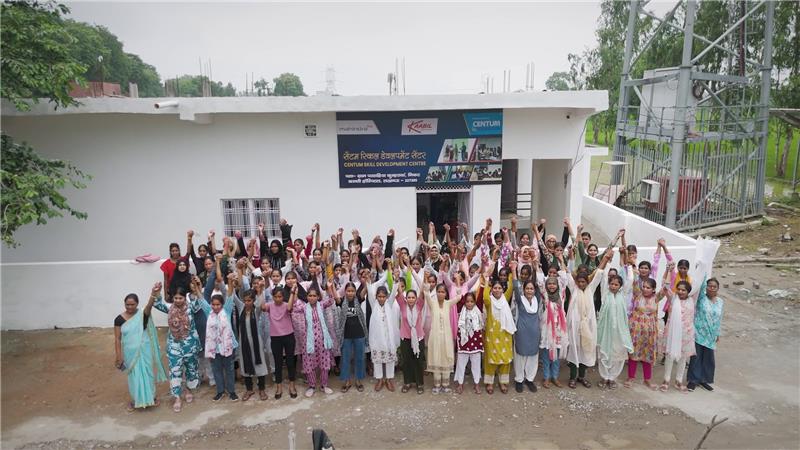
Employability Enhancement Training Program for Women (EET)
Category: Case Study
Focus Area: Corporate Social Responsibility | Women Empowerment | Employability
Corporate social responsibility in India plays a critical role in addressing gender gaps in workforce participation and economic inclusion. Despite educational progress, women—particularly from underserved communities—continue to face structural barriers such as low confidence, limited workplace exposure, and lack of employability skills.
The Employability Enhancement Training (EET) Program for Women is a flagship corporate social responsibility initiative implemented by Centum Foundation. The program was designed to equip young women with demand-driven soft skills, career readiness, and access to wage employment opportunities.
Implemented across multiple states and institutions, EET demonstrates how outcome-oriented CSR initiatives can strengthen women’s workforce participation, promote financial independence, and contribute to inclusive economic growth.

The CSR Challenge
Why Corporate Social Responsibility Was Needed
Women’s participation in India’s organized workforce remains significantly lower than men’s, particularly for young women from low-income households and non-metro regions.
Key challenges identified through baseline assessments included:
Low confidence in communication and interviews
Limited exposure to professional workplace environments
Lack of career guidance and employability skills
Socio-economic barriers restricting access to paid skill training
The CSR Initiative
Employability Enhancement Training as a CSR Initiative
The EET program was conceptualized as a structured CSR intervention to enhance women’s employability through 80–100 hours of classroom-based soft skills training delivered by certified trainers.
Core objectives of the initiative included:
Enhancing employability through communication, teamwork, and problem-solving skills
Addressing gender disparity in workforce participation
Promoting financial independence and socio-economic empowerment
Creating direct linkages to wage employment opportunities
Training content was designed to be practical, accessible, and aligned with employer expectations.
Implementation at Scale
From Vision to Action
The program was implemented across 17 states in FY 2023–24 and 12 states/UTs in FY 2024–25, including aspirational districts. Training was delivered through a network of academic institutions, vocational centres, and community-led centres to ensure wide accessibility.
The delivery model followed a structured pathway:
Mobilisation → Training → Certification → Placement
Coverage Indicator | Reach |
|---|---|
States / UTs Covered | 12–17 |
Training Centres | 58+ satellite centres |
Institutions Engaged | Colleges, ITIs, Vocational & Community Centres |
Aspirational Districts | 4 |
Who the CSR Initiative Reached
Inclusive and Targeted Beneficiaries
The EET program specifically targeted women aged 18–35, prioritising candidates from economically disadvantaged backgrounds.
Beneficiary profile highlights:
20,000+ women trained
Majority from households earning below ₹3 lakh annually
Participants from academic institutions, vocational centres, and community-led centres
Strong representation of first-time job seekers
Measurable CSR Impact
From Training to Employment
The EET program delivered strong employment outcomes across sectors.
Key Impact Metrics
Indicator | Outcome |
|---|---|
Women Trained | 20,000+ |
Women Placed | 9000+ |
Locations | 250+ |
States Covered | 19+ |
Key Sectors | Auto, BFSI, Education, Retail, Services |
Beyond Employment
Confidence, Capability, and Career Readiness
Beyond placements, the program created strong qualitative impact:
Beneficiary profile highlights:
Improved communication and interpersonal skills
Increased interview confidence and professional behaviour
Enhanced leadership, time management, and workplace adaptability
Greater motivation to pursue long-term careers
Post-training assessments showed a clear shift from low to moderate-high confidence across employability indicators, reinforcing the long-term value of CSR social responsibility initiatives.
Voices of Change
Beneficiary Stories
The program enabled thousands of women to transition from uncertainty to financial independence. Beneficiaries secured roles across industries, supporting their families and building long-term career aspirations.
Why This CSR Model Works
Confidence, Capability, and Career Readiness
A Scalable Corporate Social Responsibility Framework
The success of the EET program can be attributed to:
Demand-driven curriculum aligned with employer needs
Strong funder–implementer partnership
Direct placement linkage model
Focus on both quantitative and qualitative outcomes
Continuous learning and refinement across years
This initiative illustrates the pros of corporate social responsibility when programs are designed for scale, inclusion, and measurable impact.
Conclusion
The Employability Enhancement Training Program for Women stands as a strong example of corporate social responsibility in India driving gender equity, workforce inclusion, and economic empowerment.
By combining structured training, confidence building, and employment linkages, the initiative demonstrates how corporations that are socially responsible can create sustainable and transformative impact for women across India.
Partner with Centum Foundation to design and implement corporate social responsibility initiatives that strengthen employability, promote gender equity, and deliver measurable social impact.